Faith in a Digital Age: How Young Adults are Rediscovering Religion
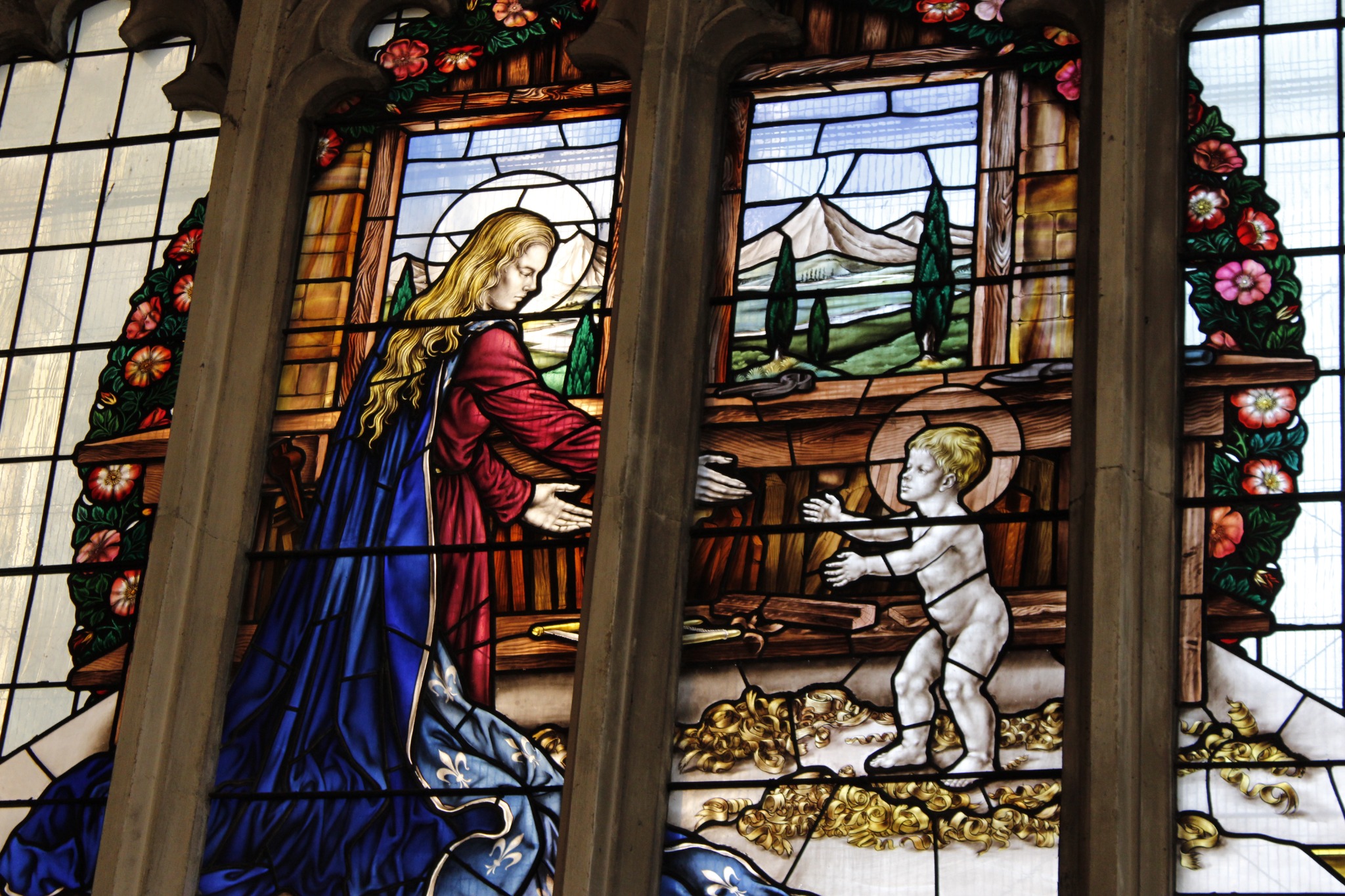
I pushed one leaf of the tall door and stepped into an empty church where dim sunlight seeped through the church’s stained-glass windows. I headed to the back, where I was meant to meet Belle Fisher, 27, parish assistant of St Dunstan and All Saints Church in Stepney, East London.
Sat on a long table in the church’s kitchen, she began telling me that over the last couple of years she has seen a rise in young people questioning what religion is about and the contribution it has to their lives, “moving away from the idea that faith is something that their parents or grandparents have, and actually looking at what relevance it has for them.”
The Bible Society published a report in 2025 tracking religious attitudes and church behaviours across England and Wales since 2018. The research showed that after years of decline in church attendance, there was a 16% increase among young adults attending church, compared with only 4% in 2018. The age group with the most monthly attendance was 18- to 24-year-olds.
Generation Z is often described as digital natives. According to Telecoming, 95% own a smartphone, and 66% say social media is essential to their daily routine. As young adults gravitate towards faith, religious institutions are beginning to adapt their approach. From increased churches’ digital presence to Christian influencers on social media, Christianity is finding new ways to reach a generation raised online.
For some young Christians, these conversations are already happening online. Amanda Lopes, 24, is a content creator on TikTok with more than 150k followers. Her content documents what she describes as “the ups and downs and imperfections in a walk with God.” Although she grew up in a “highly religious household,” Lopes says it often focused on “community and following rules” rather than on personal freedom and the journey she associates with faith now. While she acknowledges there were “problematic factors in those environments,” she admits her beliefs have evolved, approaching religion with a “constant student mentality”.
For Lopes, faith has given her confidence and comfort, fuelling her to talk about it on her socials. When questioned why she decided to start influencing people about it, the answer was simple: “It was always about promoting the truth”. Lopes’s content is centred around what “an imperfect person’s life, with a desire to live honouring God, looks like”; she describes it as often imperfect, bumpy and real. “It was never about Christianity, religion, or sides,” she insists.
She is part of a wider, growing network of creators who are turning religious discussions into viral content. On TikTok, hashtags such as #ChurchTok or #Christiantiktok are present in most videos of religious influencers. Some organisations are also trying to reach these audiences. The Way UK is a digital content group whose mission is “to share the good news of Jesus with every single young person online”. Its content is shared across many platforms: Instagram, YouTube, Spotify and their most popular one, TikTok, with almost 550k followers.
Zoe McDermott, 22, is their Digital Community Administrator. She is responsible for curating all their online content, and for her “Christianity offers something deeper” to young people, where “identity is not based on achievement and purpose is not tied to performance” in an era that is “intensely online, often driven by material success, image and productivity.” She argues that online platforms have “expanded access to authentic conversations about faith” and admits she “wouldn’t be surprised” if social media has contributed to young people’s reignition and rediscovery in Christianity simply because the conversation online “feels more visible and approachable.”
While social media has contributed to sparking young people’s interest in religion, keeping their engagement in church presents a different challenge to parishes. Fisher analysed that their attendance is dependent on what they can get out of the services and what is new to them, “it's easier when they feel like they are getting something,” she says, but when services become routine, retention is more difficult. “When it becomes a regular sort of Sunday morning service, and there is nothing novel, it becomes harder to retain young people.” In her opinion, this is a lingering effect of social media: “the young generation is so tied to things being really fast and new all the time, this idea that we get bored so easily, and if there's nothing fresh, then we kind of abandon and we don't carry on.”
According to the Campaign to End Loneliness, 12% of young Londoners (18-24) are severely lonely, and I couldn’t help but question Fisher whether she thought this could contribute to the increase in young people seeking the church. “Definitely,” she replied, pointing to the lack of third spaces in the capital, “we have less things like clubs for young people, youth centres. So, they are looking for a place to belong and a place to build a sense of identity.” For these people, the church serves as a space where they can easily be plugged into.
But while younger people are searching for spaces to belong, Fisher outlined that they are also the ones who are least likely to volunteer and commit to long-term attendance in the same church. She says it is important for this generation to realise that “in order to get something out of a community you also have to put something in”.
Fisher believes that renewed interest among young adults is “a very positive thing” for the future of churches because it has challenged earlier fears that the institution might “peter out”. She says it has encouraged the clergy to keep “pursuing new and fresh approaches”. But ultimately, this will mean that “churches will have to adapt”. At her parish in Stepney, they have already expanded their social media presence and introduced more informal events to appeal to younger audiences. “More importantly”, she says, the church is learning from this generation, incorporating issues they care about. “A lot of young people feel very strongly about equality, activism and social issues,” she says, suggesting these themes may become more prominent in discussions within the Church of England.
For some individuals, their faith not only contributes to greater social issues but also to their personal journeys. Lopes compares faith to the “wind blowing”; she explains that you don’t see it, but you hear it, and you feel it. “If you seek wholeheartedly, you will find it”, she affirms. While McDermott thinks it is about transformation and acceptance, “It’s not simply about rules or tradition”.
As our conversation came to an end, the afternoon light still filtered through the stained glass, colouring the empty pews. For now, the doors remain open. While social media and shifting cultural conversations may be encouraging more young people to explore faith, churches are still navigating how to retain the new generation’s attendance. Fisher reflected on what this engagement could look like in practice: “Think about what you would like your difference in the world or in that community to be.”
Post a comment